Tonsils

I for one, along with many other people in the world have large tonsils which although a protective mechanism for the body, may cause the host a range of issues.
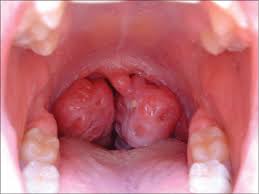
Tonsils are small organs in the back of our throats they play an important role in our body’s defence systems as they make up part of the lymphatic system. Tonsils were once thought to be a useless. Officially there are three sets of tonsils here are three sets of tonsils in the body: the pharyngeal tonsils, the palatine tonsils and the lingual tonsils, however when people refer to tonsils, though, they are usually talking about the palatine tonsils which are most commonly involved in infections and may become apparent to the host.

Tonsils, contrary to popular belief, have several uses. The tonsils prevent foreign objects from enetering into the lungs. They also filter bacteria and viruses entering the body through the mouth or nose and flush them using lymph which is a clear and colourless fluid. On top of all that, they produce white blood cells and antibodies.

As one can imagine they harbour lots of bacteria which may lead to reoccurring infections known as tonsillitis ( along with other possible infections). As a result of this they may become very inflamed and cause the host discomfort in terms of painful lymph glands in the neck, high fever, sore throats, ear ache etc. There fore people often opt to have a tonsillectomy which is a surgical procedure to remove the palatine tonsils.

This treatment is often done by means of cutting the tonsils with a scalpel, using ultra sonic vibrations to cut the tonsils away or cauterizing the tonsils with heat energy.

Tonsillectomy surgery

Mandibular Torus

This is a post in the category of mystery diagnosis and in this particular blog we will be looking at a large mandibular torus.

The official name for this diagnosis is Torus Mandibularis. It refers to a bony growth generally found on the mandible along the surface near the tongue and premolars above the location of the mylohyoid muscle. In the majority of cases of this disease it is found to be a bilateral lesion.

They are generally found more in males, particularly in people of an Asian or Inuit ethnicity. It is also more common in the earlier years of adulthood and linked to bruxist behaviour.

The good news is that they are generally benign and dont usually need to be removed however if they are very large lesions and obstruct the placement of a denture/prosthetic (should the patient require one, then they may be surgically removed by excision.

There are currently multiple case studies exploring the relationship between mechanical stimulation and the formation of mandibular tori. Although this is still inconclusive it has often been concluded that parafunctional activity could be causing the formation of mandibular tori by causing mechanical stress in the regions where the tori is seen to form. Therefore mandibular geometries that allow for stress concentration in particualr oral locations, such as square-shaped mandibles, will be associated with a greater prevalence of mandibular tori.

Waterlase is a relatively new technology that is used and is non invasive and virtually pain free. It is often used to remove tori when need be, involving a water energised laser that combines air and water. It is very effective for treating the skin, gums and bone with little pain or bleeding.

Articulator

A smile is a charming way to speak to people without saying a single word! However do you really know what it takes to create a perfect new smile through prosthetics that allow for a combination of aesthetics and comfort during functional processes?

Many people visit the dentist to get a new smile. To many that process seems relatively fast and somewhat simple for the result theyre getting. However what many patients dont know is how tedious and geometrically challenging that process may be.

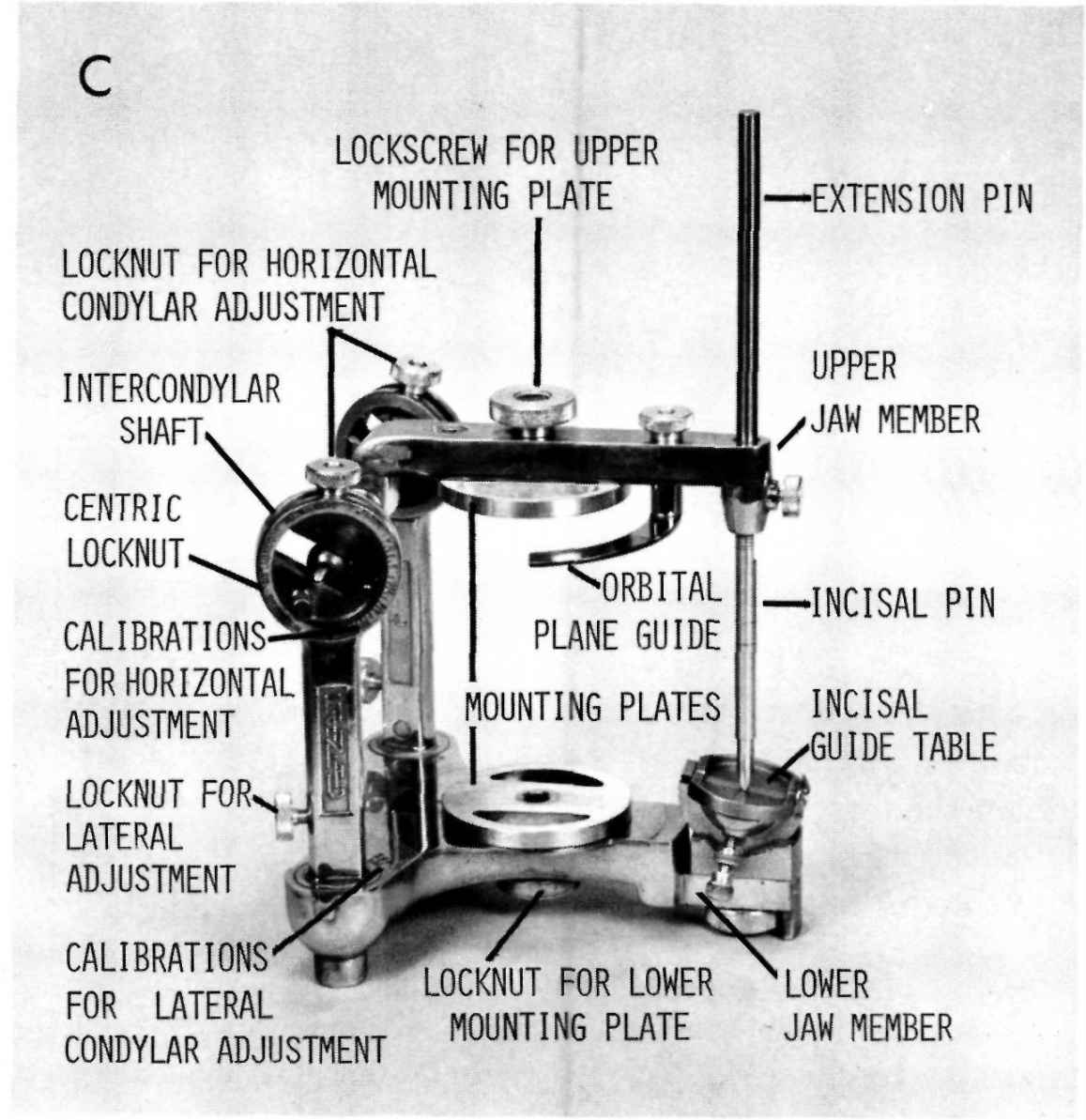
Normally an impression of the current teeth is taken and mounted on an articulator; a device that helps us (mainly the technicians) mimic the upper and lower jaw relations of a patient outside their mouth, with visibility to areas from different angles that would simply be impossible in a patients mouth. The reason this device is important is because in certain cases patients have challenging bites, as a result certain things need to be altered in the tooth preparation or the fabrication of the crown/veneer in order to provide the results that patient wishes for.

That being said there are a few different uses of the articulator in dentistry besides the most obvious one. They are firstly to hold the mandibular and maxillary casts in a determined fixed relationship, this is the main simple function. Related to the previous point, they are used to mount casts for diagnosis, treatment plans and for patient presentation and explanation/education. Another basic use of the articulator which is a fundamental necessity when producing prosthetics is to configure the jaw movements such as opening, closing and lateral protrusions.

There are a few different types of articulators, the main types dealt with are fully adjustable articulators, semi adjustable articulators, anatomical articulators, adjustable articulators and disposable articulators. The first two mentioned above are the most commonly used and the difference between them is that the semi adjustable lack the ability to change the intercondylar distance, whereas the fully adjustable articulators do not have this impairment.

Once the final impression is taken with the prepared teeth the lab will mount that on to the articulator with the patients jaw relation parameters set and start the fabrication of the crown/veneer, checking if there are interferences or alterations to the patients bite. Those checks are done throughout the fabrication, but ultimately a final check is done before they are ready to be placed in the patients mouth.